
Why Most Real Estate Marketing Fails (and How Dallin Cottle Fixes It)
https://www.youtube.com/watch?v=eJhZw7VA71s Growth Why Most Real Estate Marketing Fails (and How Dallin Cottle Fixes It) Real estate marketing usually doesn’t “fail” because the channel is dead. It fails because the strategy is incomplete, the budget is too timid to produce a signal, and teams quit before they optimize. Dallin Cottle In the Investor Fuel episode with host Mike Hambright, fractional CMO Dallin Cottle breaks down what separates high-level operators from “try-it-for-a-month” marketers, and how to build a plan that actually compounds. The Real Reason Most Marketing Breaks Down Marketing isn’t one activity. It’s a system that encompasses the offer, targeting, creative, follow-up, and measurement. When any one part is missing, the channel gets blamed. That’s why you’ll hear “PPC doesn’t work” or “SEO is dead,” even when the real problem is execution and iteration. 7 Common Reasons Real Estate Marketing Fails 1) Starting with “What can you do for $1,000?” That mindset forces tiny tests that can’t generate enough data to learn. High-level operators plan for a working budget and a test budget. 2) Cutting channels the moment performance dips Algorithms change and attention shifts. The winning move is to diagnose, test, and adapt faster than competitors, rather than panicking and scrapping the channel. 3) Confusing “busy” with “measured” If you don’t track outcomes, you end up optimizing for activity rather than results. The goal is predictable ROI and deal flow, not more marketing tasks. 4) Treating every lead source the same A cold-call lead and a Google lead often need different follow-up speed, scripts, and nurturing. When follow-up doesn’t align with intent, conversions decline even if lead volume is sufficient. 5) Trying to do expert work without expertise DIY marketing is expensive when you price in opportunity cost. If your attention is split, you can’t keep up with changes across platforms and buyer behavior. 6) Ignoring “omnipresence” Direct mail, TV, radio, PPC, SEO—these channels feed each other.If someone sees your mail and then Googles you, but you’re not showing up, you just paid to advertise your competitor. 7) Not adapting to AI-driven discovery Search is shifting toward AI answers and longer, more conversational queries. That changes how people find you and how your content needs to be structured. High-Level Operator vs. Everyday Entrepreneur Topic High-level operator Everyday entrepreneur Budget mindset Invests to find repeatable ROI Spends the least possible Channel changes Tests and adjusts quickly Declares “it’s not working” Optimization Looks for waste + reallocation Shuts the whole channel down Growth Adds channels strategically Chases tactics randomly Measurement Knows targets and baselines Tracks vanity metrics This “operator mindset” is a big theme in the episode. How Dallin Cottle Fixes It: A Practical Framework 1) Build a clear marketing plan (not a pile of tactics) Start with your target seller, your offer, and your conversion path. Then, select channels that align with the buyer’s journey. 2) Optimize before you abandon If results dip, don’t assume the channel died. Audit where spend is wasted, adjust targeting and messaging, and split-test your way back to performance. 3) Create omnipresence on purpose The goal isn’t to “do everything.” It’s to make sure every touchpoint reinforces the next one, so awareness turns into trust, and trust turns into calls. 4) Evolve with AI search behavior People increasingly ask AI tools full questions, with context and emotion.That means your website content should clearly address real scenarios, not just chase short keywords. 5) Lead follow-up is part of marketing The “handoff” matters. The speed, cadence, and nurture flow should match the lead’s intent and channel source. Quick Action Checklist Pick one primary channel you’ll commit to optimizing (not quitting) for the next 90 days. Define a baseline: target cost per lead, cost per deal, and ROI goal. Audit your funnel: ad/message → landing page → call handling → follow-up. Add one “omnipresence” layer: reputation, retargeting, or branded search coverage. Publish one piece of content that answers a real seller scenario in plain language. Fast wins you can implement immediately: Tighten phone answering + follow-up speed for inbound leads. Ensure your brand appears when people search for you after seeing your mail or ads. Update your content to answer longer, more specific questions sellers actually ask. Listen To The Episode Episode page:https://investorfuel.com/investor-fuel-show/why-most-real-estate-marketing-fails-and-how-dallin-cottle-fixes-it/ Apple:https://podcasts.apple.com/us/podcast/investor-fuel-real-estate-investing-show/id943707421 Spotify:https://open.spotify.com/show/0yjlEMMn52BRrrlhfxCn4S YouTube:https://www.youtube.com/@investorfuel FAQs Does real estate marketing “stop working” when platforms change? Usually not. What changes is how you earn attention, how you target, and what converts. The operators who adapt win. What’s the biggest mistake small investors make with marketing budgets? They underfund tests, then conclude the channel failed. Without enough volume, you can’t learn what to optimize. What does “omnipresence” mean in real estate marketing? It means being consistently visible across the places sellers check before they trust you. Channels work more effectively when used together than when used in isolation. How is AI changing SEO and lead generation? More discovery is happening through AI answers and conversational queries. Content needs to be clearer, more scenario-based, and more helpful to real questions. What does a fractional CMO do differently than a single-channel agency? A fractional CMO looks across the entire marketing system, including channels, messaging, measurement, and follow-up, so efforts don’t conflict and performance improves end-to-end.
How a Fractional CMO Brings Clarity to Startup Marketing Goals in January
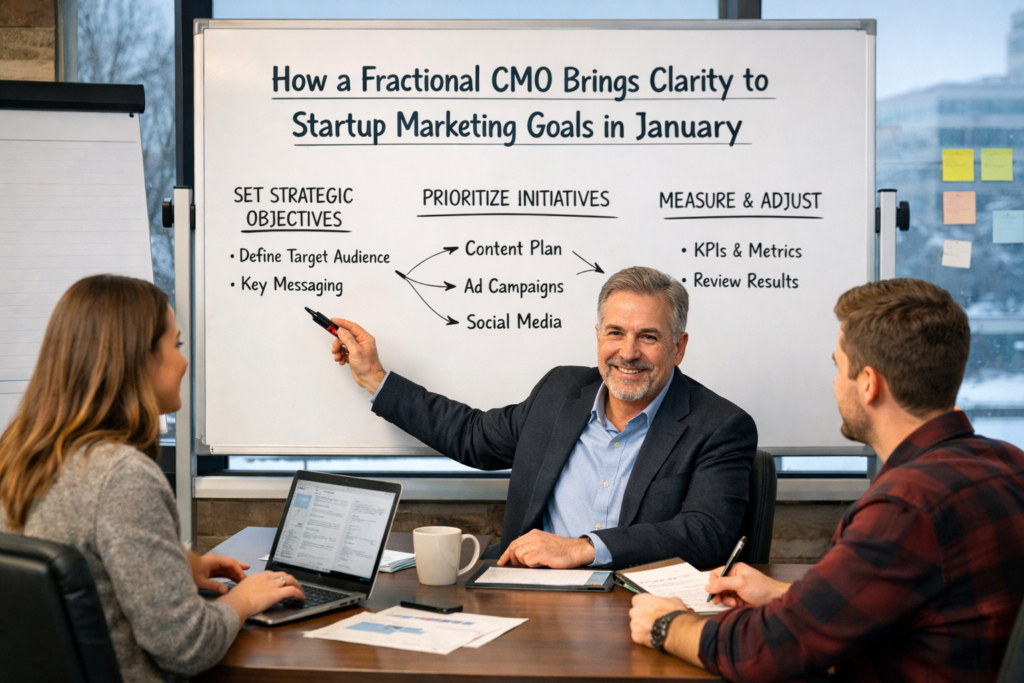
Growth How a Fractional CMO Brings Clarity to Startup Marketing Goals in January January is a critical reset point for startups. Budgets are refreshed, expectations rise, and leadership teams seek sharper direction after reviewing what did and did not work last year. Dallin Cottle For many startups, marketing remains the most unclear function at the start of the year. Channels feel scattered, goals feel vague, and execution often lacks focus. This is where a fractional CMO can bring immediate structure and clarity. A fractional CMO helps startups move from guesswork to strategy. Instead of chasing trends or reacting to noise, startups gain a clear marketing roadmap built around measurable outcomes. Why January Is the Most Important Month for Marketing Clarity January sets the tone for the entire year. Decisions made during this month often determine whether marketing becomes a growth driver or a recurring frustration. Startups frequently enter January with ambition but limited alignment. Founders may want growth, sales teams may wish to lead, and marketing teams may want to increase brand awareness, but none of these objectives are clearly prioritized. A fractional CMO starts by aligning expectations. They translate high-level business objectives into focused marketing goals that teams can execute with confidence. The Core Role of a Fractional CMO for Startups A fractional CMO provides senior-level marketing leadership without the cost or commitment of a full-time hire. More importantly, they bring clarity to decisions that startups often struggle to make internally. Instead of asking “What should we try next?”, the question becomes “What should we focus on now?”. That shift alone removes confusion, wasted spend, and internal friction. Key areas a fractional CMO focuses on early in January include: Clarifying business objectives and revenue targets Auditing existing marketing efforts and performance Defining realistic goals based on stage and resources Prioritizing channels that actually support growth This clarity enables startups to avoid spreading their efforts too thin. It replaces activity with intention. How a Fractional CMO Structures Marketing Goals Marketing clarity does not come from more ideas. It comes from a better structure. A fractional CMO typically introduces a clear framework that connects business outcomes to marketing actions. A common January goal-setting process looks like this: Review last year’s performance across all marketing channels Identify what directly contributed to revenue or traction Eliminate low-impact or misaligned efforts Define 3–5 core marketing priorities for the quarter Assign ownership, timelines, and success metrics This process removes ambiguity. Teams know what matters, what does not, and why. Startup Marketing Before vs After a Fractional CMO Area Before Fractional CMO After Fractional CMO Goals Vague or conflicting Clear and measurable Strategy Channel-driven Business-driven Budget Reactive spending Planned allocation Messaging Inconsistent Focused and aligned Execution Scattered efforts Prioritized actions This shift is especially powerful in January. It allows startups to start the year with discipline instead of uncertainty. How Clarity Improves Execution and Team Alignment When goals are clear, execution improves naturally. Teams stop debating direction and start moving forward together. A fractional CMO creates a shared language around marketing success. Everyone understands the goal, how progress is measured, and what success looks like. This clarity benefits multiple areas: Marketing teams gain focus and confidence Founders gain visibility and predictability Sales teams receive better-aligned support Budgets are used more efficiently Instead of constantly making course corrections, startups operate with intention. That consistency compounds over the year. Why Startups Benefit More Than Enterprises Startups feel the impact of poor marketing clarity more intensely. Limited budgets, smaller teams, and shorter runways leave little room for error. A fractional CMO helps startups avoid expensive mistakes early in the year. They guide decisions based on experience rather than relying solely on experimentation. This does not slow startups down. It actually helps them move faster by removing distractions and false priorities. Why This Matters for the Rest of the Year January decisions echo throughout the year. Clarity established early reduces wasted effort, missed opportunities, and internal confusion across growing startup teams. At ROAR Media, a fractional CMO approach helps startups do more than just “start strong.” It ensures marketing efforts stay aligned with business goals as the year progresses, creating the consistency needed to move from stalled growth to scalable momentum. FAQs Why do startups struggle with marketing clarity in January? Startups often begin the year with ambition but no unified strategy. Different teams push different priorities, creating confusion instead of focus. How is a fractional CMO different from a marketing consultant? A fractional CMO acts as a strategic leader, not just an advisor. They own direction, guide execution, and align marketing with business goals. Is January the best time to bring on a fractional CMO? Yes, because strategic decisions made in January shape the entire year. Early clarity prevents wasted spend and misaligned execution later. Can a fractional CMO work with an existing marketing team? Absolutely. They enhance internal teams by providing leadership, structure, and prioritization. How long does it take to see clarity after hiring a fractional CMO? Most startups gain meaningful clarity within the first few weeks. Clear goals and priorities are usually established early in the engagement.
High-Converting Webinar Strategies for Premium Healthcare Services

Growth High-Converting Webinar Strategies for Premium Healthcare Services High-ticket healthcare webinars achieving 12-18% conversion rates employ a specialized “Educational Authority” framework that combines 60% education with strategic sales messaging, leveraging compliance-friendly trust-building over traditional urgency tactics. The most successful practitioners in regenerative medicine, functional medicine, and longevity services structure their webinars as 60-minute educational experiences that position consultations as the natural next step for personalized care, rather than pushing direct sales. Dallin Cottle Healthcare webinars face unique challenges: stringent FDA and FTC regulations, HIPAA compliance requirements, and sophisticated audiences who demand evidence-based approaches. Yet when executed properly, these webinars consistently outperform other industries, with top performers achieving 20% conversion rates for services priced between $2,000 and $10,000. The key lies in understanding that healthcare decision-making follows distinct psychological patterns where authority, trust, and patient transformation stories matter more than traditional sales tactics. The Educational-First Format Dominates Premium Healthcare Research reveals that educational webinars convert at 15-25% to consultations, compared to just 10-20% for sales-focused presentations. The most effective structure adapts Russell Brunson’s Perfect Webinar framework for healthcare compliance: a 3-5 minute professional introduction establishing credentials, 45-50 minutes presenting “One Health Breakthrough” with three clinical insights backed by case studies, 10-15 minutes discussing treatment options as education rather than sales pitch, and 15-20 minutes of extended Q&A that naturally positions the practitioner as the trusted expert. This 80/20 education-to-sales ratio addresses the reality that 67% of healthcare webinar attendees prefer live Q&A sessions, viewing them as opportunities to evaluate the practitioner’s expertise. Successful practitioners like those at Cenegenics and Cleveland Clinic’s functional medicine programs structure their presentations around patient transformation journeys rather than feature lists, using what experts call the “hero’s journey” narrative arc where patients move from struggle through treatment to renewed health. The hybrid webinar model maximizes both reach and conversion. While 68% of affluent healthcare consumers prefer live formats for real-time interaction, offering replay access captures the 43% who watch recordings, with on-demand viewers actually staying engaged longer—an average of 57 minutes versus 52 minutes for live attendees. Compliance Creates Competitive Advantage, Not Limitation FDA and FTC regulations, rather than constraining healthcare webinars, provide a framework for building exceptional trust. The key requirement—that all claims be “truthful, not misleading, and substantiated by competent and reliable scientific evidence”—forces practitioners to lead with education and evidence, exactly what converts skeptical high-ticket buyers. Successful practitioners navigate compliance through specific language patterns. Instead of claiming to “cure” or “eliminate” conditions, they use phrases like “may support,” “intended for general wellness,” and “consult your healthcare provider.” They structure webinars with clear disclaimers at registration, opening, and closing, stating explicitly that content is educational and doesn’t constitute medical advice. Patient testimonials, when used, require written HIPAA authorization and must represent typical results with specific disclosures of expected outcomes. The compliant call-to-action focuses on consultation rather than treatment purchase. Top-converting webinars position the next step as a personalized assessment or consultation where individualized recommendations can be made within the proper patient-practitioner relationship. This approach not only maintains compliance but actually increases conversions by removing pressure and building trust. Platform selection matters for compliance. Healthcare organizations must use HIPAA-compliant webinar platforms with signed Business Associate Agreements. Platforms like StealthSeminar and certain Zoom plans provide these features, while public platforms like Facebook Live cannot be used for any content potentially involving protected health information. Timing and Format Preferences Reveal Surprising Patterns Healthcare webinars break conventional wisdom about length and scheduling. The optimal duration is 60 minutes, with healthcare webinars currently averaging 63 minutes—longer than other industries—yet maintaining engagement when content quality justifies the time investment. However, actual attention averages only 23 minutes out of 63, making it critical to front-load high-value content in the first half-hour. Tuesday and Thursday remain the best days for healthcare webinars, but a unique pattern emerges: 6% of healthcare webinars occur on Saturdays compared to just 1% in other industries, reflecting healthcare professionals’ non-traditional schedules and affluent patients’ weekend availability for health education. The optimal times are 11 AM PST/2 PM EST and 2 PM PST/5 PM EST, balancing coast-to-coast accessibility. Audience size directly impacts conversion rates. Webinars with under 200 attendees consistently achieve the highest conversion rates, suggesting that intimate, high-touch presentations outperform massive attendance events for premium services. Healthcare organizations host an average of 23 webinars annually—64% more than other industries—indicating that consistency and frequency matter more than individual webinar size. June sees the highest concentration of healthcare webinars (11% of annual volume), while September through November captures 30% of yearly webinars, aligning with end-of-year healthcare spending and benefit utilization patterns. Premium Healthcare Success Stories Reveal Conversion Patterns Real-world implementations demonstrate the power of properly executed healthcare webinars. Cenegenics, the pioneer in age management medicine with services exceeding $10,000, generates consistent leads through educational webinars that helped drive 158,857 website visitors through integrated marketing. Their approach combines webinar education with reputation management, achieving the highest review generation in their 22-year history. The FM Shift program teaches functional medicine practitioners to charge $10,000+ per patient using webinar-based authority building. Their framework emphasizes personalized, precision medicine approaches that justify premium pricing through demonstrated expertise and comprehensive care models. Mayo Clinic and Cleveland Clinic leverage webinar series for their executive health and regenerative medicine programs, using continuing medical education (CME) credits to attract professional audiences while subtly promoting premium services. LinkedIn emerges as the highest-converting registration source with a 5.67% registration rate, compared to 2.86% for email and 4.27% for Meta ads. This aligns with the professional nature of the target audience—affluent individuals researching premium healthcare options. The anti-aging and longevity market, growing at 21.5% CAGR toward $537.6 billion by 2034, shows the high-net-worth segment as the fastest-growing, validating the webinar approach for this demographic. Psychological Triggers Require Healthcare-Specific Calibration Healthcare decision-making operates on unique psychological principles that standard webinar tactics must be adapted to address. Fear appeals work effectively when immediately balanced with hope and clear solutions—presenting “what happens if you wait” scenarios backed by statistics, then following with transformation possibilities. The phrase
When to Hire a Marketing Strategy Consultant: The Complete Guide for Business Growth

Growth When to Hire a Marketing Strategy Consultant: The Complete Guide for Business Growth When Should You Hire a Marketing Strategy Consultant? Hire a marketing strategy consutant when growth has stalled, you’re entering a new market, launching new products, your efforts are fragmented, or your internal team lacks sufficient expertise or bandwidth. A consultant provides specialized knowledge, an objective view, and proven frameworks to strengthen marketing performance. Dallin Cottle 8 Clear Signs It’s Time to Hire a Marketing Strategy Consultant 1. Stagnant or Declining Growth Despite Increased Spending The Problem: Your marketing budget keeps growing, but revenue stays flat. Recent 2025 research shows that 51% of B2B companies say getting new marketing qualified leads (MQLs) into the pipeline is an urgent priority, with 30% calling it mission-critical. When your cost per acquisition rises while conversion rates drop, it signals fundamental strategy issues. What This Looks Like: Monthly recurring revenue (MRR) hasn’t grown in 6+ months Customer acquisition costs increased by 20% or more Marketing qualified leads (MQLs) aren’t converting to sales 2. Lack of Specialized Marketing Expertise In-House The Reality: Modern marketing requires deep expertise across multiple channels. Current data from 2025 shows that 25% of marketing professionals consider lead generation and qualification the most effective application of specialized expertise in marketing automation. Top-performing B2B companies have a 2.5 times higher lead generation rate for high-quality leads than those lacking specialized knowledge. Key Areas Requiring Specialized Knowledge: Search engine optimization (SEO) Pay-per-click (PPC) advertising Marketing automation and email sequences Conversion rate optimization (CRO) Social media advertising 3. Fragmented Marketing Strategy Without Clear Direction The Challenge: You’re executing tactics without a cohesive strategy. According to 2025 research, 40% of B2B businesses cite lead quality as one of their top three challenges, often resulting from fragmented approaches. Studies show that businesses with integrated marketing strategies see 20% higher revenue growth compared to those using disconnected tactics. Signs of Fragmentation: Different messages across various marketing channels No clear customer journey mapping Campaigns that don’t support overall business objectives Inconsistent brand positioning 4. Entering New Markets or Launching Products The Opportunity: New ventures require specialized go-to-market expertise.Research by CB Insights reveals that 70% of startups fail due to premature scaling and poor market fit understanding. When You Need Expert Guidance: Expanding to international markets Launching in different industry verticals Introducing new product lines Targeting different customer segments 5. Limited Internal Bandwidth and Team Overwhelm The Constraint: Your team is too busy with daily operations for strategic thinking. Current 2025 data reveals that 50% of marketers allocate at least half of their budget towards lead generation efforts, yet many teams lack the bandwidth for strategic optimization. When teams focus primarily on execution without strategic development, businesses miss critical growth opportunities. Warning Signs: The marketing team works overtime regularly No time for campaign optimization or testing Reactive approach to marketing opportunities Delayed campaign launches due to resource constraints 6. Unclear Target Audience and Messaging Problems The Challenge: You’re trying to appeal to everyone and connecting with no one. Current 2025 research shows that 72% of shoppers exclusively interact with marketing content that resonates with their specific preferences. Meanwhile, personalized campaigns deliver 6x higher transaction rates than generic messaging, yet many businesses struggle with audience clarity. Signs of Poor Targeting: High bounce rates across marketing channels Low engagement rates on content Difficulty explaining your unique value proposition Marketing messages that sound like everyone else’s 7. Poor Conversion Rates and Sales Funnel Performance The Numbers: According to the latest 2025 industry data, the average conversion rate across all industries is 2.9%, with professional services achieving the highest rates at 4.6%. However, only 31% of initial leads progress to become marketing-qualified leads, highlighting significant funnel optimization opportunities. Optimization Areas: Website user experience and page speed Lead capture form design and placement Email nurture sequences and timing Sales page copy and call-to-action placement 8. Outdated Marketing Channels and Technology Stack The Reality: Marketing technology evolves rapidly, and yesterday’s best practices become today’s missed opportunities. 2025 data reveals that 58% of B2B marketers consider video the most effective content type for lead generation, while 90% acknowledge video’s crucial role in the lead generation process. Companies using AI report up to 50% increases in lead generation and 47% higher conversion rates. Signs Your Stack is Outdated: Using marketing tools from 3+ years ago Manual processes that could be automated Inability to track customer journeys across touchpoints Missing integration between marketing and sales platforms ROI by Marketing Channel in 2025 A marketing consultant’s value is best understood through the latest ROI data across common channels. Channel B2B ROI B2C ROI Notes SEO 748% 721% Long-term returns, highest overall ROI, patience required SEM/PPC 36% 24% Best for short-term results, costly over time Email Marketing 261% 298% Nurtures leads affordably, list quality critical LinkedIn Paid 229% 57% B2B excels, needs ongoing optimization LinkedIn Organic 192% 88% Consistent management required Facebook Ads 87% 443% High B2C performance, test targeting needed Webinars 430% 113% Warm leads, needs expert hosts and upfront investment Influencer Marketing 206% 689% B2C wins, works B2B with industry personalities Online PR 62% 156% Aids perception, less direct lead gen The Strategic Value of Professional Marketing Consultation Specialized Expertise That Delivers ROI Businesses using consultants average ROI improvements of 3-10x in the first year, with access to enterprise tools, analytics, and actionable strategies. Fresh Perspective and Objective Analysis External consultants spot gaps and new opportunities internal teams can miss, benchmarking against industry bests and catching messaging problems. Tools, Data, and Technology Access Consultants provide access to $50,000+ worth of annual marketing software, including advanced analytics, automation, and creative tools. Key Business Scenarios for Hiring a Consultant Unclear audience and messaging: Personalized campaigns deliver 6x higher transaction rates. Low conversion rates: Top landing pages convert at 11.45%, average rates lag around 2.35%. Outdated channels: Channels like video and AI-based targeting are growing 25%+ yearly; consultants ensure relevancy. Maximizing ROI from Marketing Strategy Consultation Choose Results-Focused Partners Top consultants guarantee performance improvements, provide specific ROI
10 Benefits of Hiring a Fractional CMO in 2025

Growth 10 Benefits of Hiring a Fractional CMO in 2025 Hiring a fractional Chief Marketing Officer (CMO) offers numerous benefits, significantly reducing costs while providing strategic marketing expertise. Fractional CMOs deliver strategic marketing leadership, align marketing efforts with business goals, and provide cost savings ranging from 50-75% compared to full-time CMO salaries. Dallin Cottle What Is a Fractional CMO A fractional CMO is a part-time marketing executive who provides strategic guidance, oversees marketing initiatives, and drives business growth without the full-time commitment or cost. Unlike marketing consultants, fractional CMOs integrate directly into your leadership team, attend executive meetings, and take real ownership of marketing outcomes. The Top 10 Benefits of Hiring a Fractional CMO 1. Reduced Expenses Fractional CMOs significantly reduce costs compared to hiring full-time executives. They provide strategic marketing leadership while delivering significant cost advantages, making them an attractive option for businesses of various sizes. 2. Scalability They can flex and flow to complement your team, allowing seamless scaling of marketing efforts. Fractional CMOs adapt to your evolving organizational needs, scaling marketing leadership up or down as priorities shift. 3. Eliminate Overhead You can work with fractional CMOs without worrying about office space, benefits, and other overhead costs typically associated with full-time hires while accessing top-tier marketing expertise. 4. Focus on ROI Fractional CMOs deliver high ROI through well-planned budget allocation, helping you invest more effectively in marketing campaigns and maximize marketing effectiveness through data-driven decision making. 5. Enhanced Expertise You can access specialized knowledge from diverse experiences across various companies and industries, enabling innovative strategies, cutting-edge tactics, and industry best practices. 6. Strategic Perspective Fractional CMOs provide compelling strategic guidance, working closely with business leaders to align marketing goals with business strategy, ensuring cohesive approaches across all marketing initiatives. 7. Objective Perspective As external consultants, they’re not weighed down by office politics or legacy decision-making. Fractional CMOs provide objective advice and fresh perspectives to help identify new opportunities and overcome existing challenges. 8. Streamlined Execution Unlike marketing agencies that often add layers to your structure, fractional CMOs integrate directly into your marketing strategy, optimizing existing processes and fostering better collaboration. 9. Flexibility and Scalability Their flexible engagement adjusts to your business needs and project requirements, allowing flexibility in engagement types, from part-time contracts to project-based timelines. 10. Adapt to Market Changes Fractional CMOs understand current market conditions and emerging trends, providing strategic guidance to help you respond to competitive threats and market opportunities quickly. Why Fractional CMOs Are Smart Strategic Investments The fractional CMO model addresses specific business needs while providing measurable returns. Companies utilizing fractional CMO services report improved marketing effectiveness, better budget allocation, and accelerated business growth. For Startups: Get access to executive-level marketing expertise without the financial burden of full-time hires. For Growing Companies: Scale your marketing leadership as the business evolves without permanent overhead costs. For Established Businesses: Bring fresh perspectives and innovative strategies to revitalize stagnant marketing efforts. When Should You Consider a Fractional CMO? You should consider hiring a fractional CMO if you’re experiencing: Inconsistent marketing results or an unclear marketing strategy A need for specialized marketing expertise for specific projects Budget constraints that are preventing full-time executive hiring A desire to test marketing leadership before making a permanent commitment Rapid growth that requires strategic marketing guidance Conclusion The benefits of hiring a fractional CMO extend well beyond just cost savings. Companies gain access to executive-level expertise, strategic guidance, and proven methodologies that drive measurable business results. With the flexibility to scale engagement based on business needs and significant ROI improvements, fractional CMOs represent smart strategic investments in sustainable marketing success. FAQs What’s the difference between a fractional CMO and a marketing consultant? A fractional CMO integrates as part of your executive team, attending leadership meetings and taking ownership of marketing outcomes. Marketing consultants typically provide recommendations without ongoing accountability for implementation. How much does it cost to hire a fractional CMO? Fractional CMO costs typically range from $5,000-$15,000 per month, depending on scope and experience level. This represents 50-75% savings compared to full-time CMO salaries of $200,000-$350,000 annually. How long should I work with a fractional CMO? Most engagements last 6-18 months, allowing enough time to develop strategy, implement systems, and see measurable results. The duration depends on your specific goals and business complexity. Can a fractional CMO work with my existing marketing team? Yes, fractional CMOs are designed to enhance and lead existing teams, providing strategic direction, mentorship, and accountability while leveraging your current marketing resources more effectively. What size business benefits most from a fractional CMO? Companies with $1-50 million annually benefit most from fractional CMO services. These businesses need strategic marketing leadership, but usually can’t justify full-time executive costs. Ready to Experience These Benefits with ROAR Media? If you’re convinced that a fractional CMO could transform your business, you’re in the right place. At ROAR Media, we’ve helped hundreds of companies achieve remarkable growth through our proven fractional CMO services. Our experienced marketing executives don’t just develop strategies; we implement them, measure results, and ensure your marketing drives real business outcomes. Whether you’re a startup looking to scale efficiently or an established business ready to break through growth plateaus, our fractional CMOs bring the expertise, accountability, and results you need. Ready to see what strategic marketing leadership can do for your business? Contact us today to schedule a consultation and discover how ROAR Media can accelerate your growth.
What is a Fractional CMO for Small Businesses

Growth What is a Fractional CMO for Small Businesses A fractional CMO is your secret weapon for getting big-company marketing expertise without the big-company price tag – essentially a part-time Chief Marketing Officer who works 15-20 hours per week at 60-75% cost savings compared to full-time executives. Dallin Cottle Here’s the reality most small business owners face. You’re doing well enough to need serious marketing leadership, but not quite ready to drop $250,000 on a full-time Chief Marketing Officer. According to recent data from the Bureau of Labor Statistics, the median CMO salary hit $239,200 in 2024, and that’s before benefits, equity, and bonuses kick in. Meanwhile, your current marketing person is solid at running campaigns and managing social media, but when investors start asking about customer lifetime value optimization or multi-channel attribution modeling, things get uncomfortable fast. Quick Overview: Fractional CMO Essentials What You Get Traditional CMO Fractional CMO Marketing Manager Annual Cost $250,000 – $400,000+ $20,000 – $48,000 $65,000 – $95,000 Experience Level 15+ years 15+ years 3-8 years Strategic Depth Very High Very High Medium Time Commitment 40+ hours/week 15-20 hours/week 40 hours/week Best For $50M+ revenue $5M – $50M revenue Execution focus When Your Business Actually Needs This Revenue Growth: You’ve been growing steadily, but suddenly, customer acquisition costs are climbing while conversion rates flatten. Something fundamental has shifted in your market, and you need someone with the experience to diagnose what’s happening and fix it. Investment or Exit Preparation: Private equity firms and strategic acquirers evaluate marketing operations with a fine-tooth comb. They want to see sophisticated attribution models, predictable growth systems, and scalable processes. Team Development Gaps: Maybe you’ve got talented individual contributors but lack the senior leadership to guide overall strategy. Your team needs mentorship, career development, and someone who can translate business objectives into actionable marketing plans. What They Actually Do (And Why It Matters) The best fractional CMOs operate like genuine executives, not consultants with monthly PowerPoint presentations. They become part of your leadership team and take ownership of results. Strategic Planning: They spend their first 60 days conducting a marketing audit – analyzing customer data, competitive landscape, and current performance. They’re looking for direct connections between marketing activities and revenue outcomes. According to Harvard Business Review research, companies with aligned sales and marketing teams achieve 20% annual revenue growth, compared to 4% decline for misaligned organizations. Team Leadership: They quickly assess individual strengths, identify skill gaps, and create development plans that elevate team performance. The Real Benefits Nobody Talks About Everyone focuses on cost savings, but that’s honestly just the starting point. The real value comes from experience and network effects you can’t get anywhere else. Objective Problem-Solving: Internal teams often develop blind spots or get attached to strategies that aren’t working. Fractional CMOs walk in with zero emotional investment in past decisions. They can quickly identify what’s working, what’s not, and make tough calls about resource allocation. Network Access and Vendor Relationships Experienced fractional CMOs know people throughout the marketing ecosystem. Need a specialized consultant for conversion rate optimization? They’ve probably worked with the best ones. Looking for better pricing on your marketing automation platform? Their existing relationships often unlock better deals. Scalable Expertise During product launches or major campaigns, you can increase your time commitment temporarily. During slower periods, scale back to maintenance mode. This flexibility is impossible with full-time executives who expect consistent workloads. How to Choose the Right Fractional CMO Not all fractional CMOs are created equal, and I’ve seen businesses make expensive mistakes by choosing based on price or impressive LinkedIn profiles that don’t match their actual needs. Industry Experience: Look for someone who’s worked in your space. B2B SaaS marketing is fundamentally different from e-commerce or professional services. Results Obsession: The best fractional CMOs establish clear KPIs from day one. They should explain exactly how they’ll measure success and report progress. Reference Quality: Ask for references from companies at similar growth stages in comparable industries. Why This Matters for Your Business Small businesses compete in the same digital channels as Fortune 500 companies without the same budgets or expertise. Customer acquisition costs continue rising, and companies that win have sophisticated marketing operations and strategic thinking. Fractional CMO services level the playing field by providing executive-level marketing leadership at a fraction of traditional cost. It’s about accessing expertise that accelerates growth, improves competitive positioning, and builds scalable systems. FAQs What qualifications should I look for in a fractional CMO? Look for 10+ years of marketing leadership experience with previous full-time CMO or VP Marketing roles. They should have quantifiable results with companies similar to yours and expertise in digital marketing, analytics, and team development. How much do fractional CMO services typically cost? Most charge between $5,000-$15,000 monthly for 15-20 hours per week. This represents significant savings compared to full-time executive compensation while providing the same level of strategic expertise and decision-making authority. What’s the difference between a fractional CMO and a marketing consultant? Fractional CMOs provide ongoing strategic leadership as part of your executive team, while consultants typically focus on specific projects. Think executive team member versus outside advisor – fractional CMOs take ownership of results. How quickly can I expect to see results? Most can identify opportunities and implement quick wins within 30-60 days. Comprehensive strategic initiatives typically show measurable results within 90-120 days, with significant improvements often visible by the end of the first quarter. Can they work effectively with my existing marketing team? Absolutely. Most fractional CMOs excel at developing existing teams through mentorship, process improvement, and strategic guidance while optimizing current resources and often improving team morale and retention. Ready to Transform Your Marketing with ROAR Media? If you’re ready to experience the benefits of fractional CMO leadership, ROAR Media specializes in helping small businesses achieve remarkable growth through strategic marketing expertise. Our experienced fractional CMOs don’t just develop strategies; we implement them and ensure your marketing drives real business outcomes. Whether you’re looking to scale efficiently or break through growth plateaus,
Why the New Year Is the Best Time for Startups to Hire a Fractional CMO
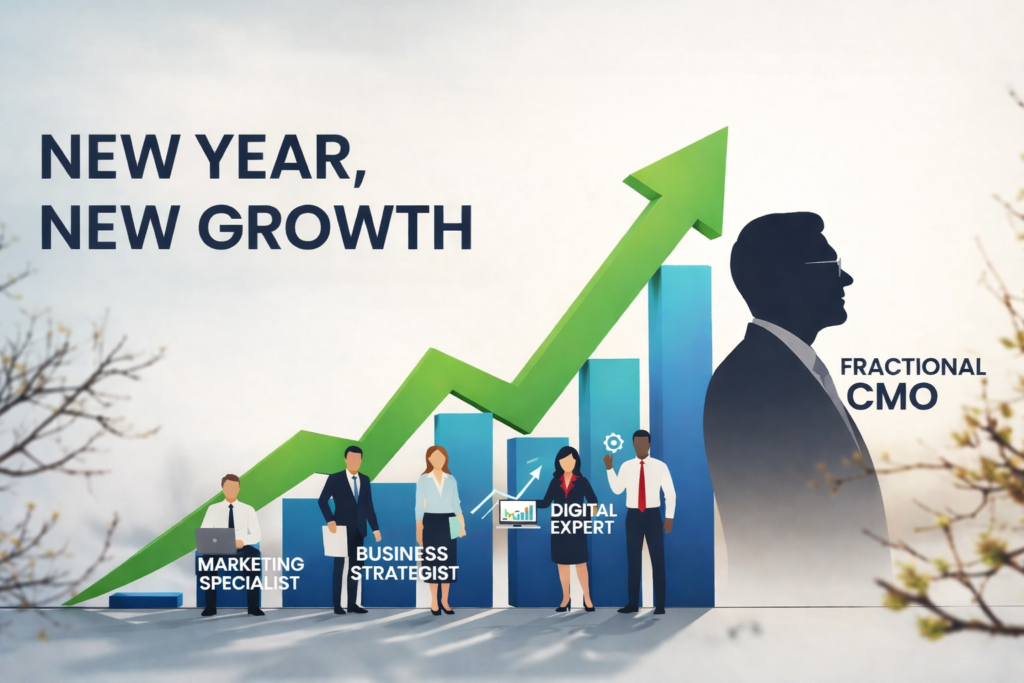
Growth Why the New Year Is the Best Time for Startups to Hire a Fractional CMO The New Year creates a rare moment of clarity for startup founders. Budgets reset. Priorities become visible. And growth decisions stop being theoretical and start becoming urgent. For many startups, January is when marketing issues finally become clear. Dallin Cottle Lead flow feels inconsistent. Spend is happening without predictable returns. Teams are busy, but direction feels unclear. This is exactly why the New Year is often the best time to bring in a Fractional CMO. Rather than reacting later in the year, startups that address marketing leadership early tend to move faster, waste less, and scale with intention. The New Year Forces Startups to Look at the Whole Picture At the start of the year, founders naturally review what worked and what didn’t. This review often reveals patterns that were easy to ignore during day-to-day execution. Common realizations include: Marketing efforts feel scattered across too many channels No clear ownership of strategy, only execution Customer acquisition costs are slowly increasing Messaging that no longer matches the market A Fractional CMO steps in at exactly this moment to provide perspective, structure, and leadership without the long-term commitment of a full executive hire. Why January Timing Matters More Than Most Founders Think Marketing decisions made in January shape the entire year. When leadership is missing early: Campaigns launch without alignment Budgets are spent reactively Teams chase tactics instead of outcomes When leadership is added early: Strategy is set before momentum builds Systems are designed before scale begins Metrics are defined before reporting gets messy Hiring a Fractional CMO at the start of the year enables startups to build forward instead of constantly fixing past issues. What a Fractional CMO Focuses on First in the New Year A strong Fractional CMO does not start with tactics. They start with clarity. Typical early-year priorities include: Defining clear growth goals for the year Auditing current marketing channels and spending Aligning messaging with the current market reality Establishing measurable KPIs By creating a realistic roadmap, the team can execute This upfront work creates focus, which is often what startups are missing most. Fractional CMO vs Full-Time CMO at the Start of the Year Area Fractional CMO Full-Time CMO Time to onboard Fast Slow Cost flexibility High Low Strategic focus Immediate Delayed Risk for early-stage startups Low High Ability to test leadership fit Yes No For startups still validating their growth model, flexibility matters more than titles. That flexibility is one reason Fractional CMOs are often a better fit at the beginning of the year. Key Benefits Startups Gain by Hiring Early 1. Clear Direction Before ScaleStrategy is established before growth accelerates. 2. Smarter Budget AllocationSpend aligns with goals, rather than relying on guesswork. 3. Faster ExecutionTeams move with confidence instead of hesitation. 4. Improved AccountabilityMetrics are defined and tracked from the very beginning. 5. Reduced Founder OverloadFounders step out of marketing micromanagement. When these benefits are in place early, the rest of the year becomes easier to manage. Why Waiting Until Mid-Year Usually Costs More Many startups delay leadership until problems feel urgent. By that point: Money has already been wasted Teams are frustrated Funnels need repairs instead of optimization Hiring a Fractional CMO in January helps prevent these downstream issues, rather than paying to fix them later. This proactive approach is one reason growth-focused teams partner early with experienced leadership like ROAR Media to guide marketing decisions before momentum builds. FAQs What is a Fractional CMO for startups? A Fractional CMO provides senior marketing leadership on a part-time or contract basis without requiring a full-time hire. Why is the New Year a better time than later months? January allows strategy, budgets, and systems to be built before growth efforts compound mistakes. Is a Fractional CMO only for early-stage startups? No. Many funded and scaling startups use Fractional CMOs to maintain flexibility while growing. How long do startups typically work with a Fractional CMO? Engagements often range from 3 to 12 months, depending on growth goals and internal maturity. Can a Fractional CMO work with an existing marketing team? Yes. They often provide leadership, structure, and direction to existing teams rather than replacing them.
Why a Fractional CMO for Real Estate Could Be Your Best Marketing Move

Growth Why a Fractional CMO for Real Estate Could Be Your Best Marketing Move Real estate marketing has changed faster than most investors, brokers, and operators expected. SEO is no longer just keywords. Paid ads are no longer plug-and-play. And “posting on social media” is no longer a strategy. Dallin Cottle For many real estate businesses, the challenge is not a lack of effort; rather, it is a lack of effective strategies. It is a direction. This is where a Fractional CMO for real estate has quietly become one of the most effective marketing decisions a growing company can make. Instead of hiring a full in-house executive or juggling disconnected vendors, real estate brands are turning to fractional leadership to bring clarity, structure, and measurable growth. What a Fractional CMO Actually Does for Real Estate Businesses A Fractional CMO is not a consultant who drops off a report and disappears. They are not just a marketing manager executing tasks; they are also a strategic partner. A Fractional CMO operates as your strategic marketing leader, but on a part-time or flexible basis. For real estate companies, this typically includes: Designing a clear marketing strategy tied to revenue goals Aligning SEO, paid ads, content, and conversion tracking Managing agencies, vendors, and internal teams Prioritizing channels that actually drive motivated leads Translating data into decisions, not just reports The key difference is accountability. A Fractional CMO is responsible for outcomes, not activity. Why Real Estate Marketing Breaks Without Strategic Leadership Many real estate companies reach a point where marketing feels busy but underperforms. Common signs include: Strong traffic but inconsistent lead quality Paid ads produce leads that do not convert SEO content ranking but not generating calls Multiple vendors are working without coordination No clear answer to “what’s driving revenue right now” Without a unified strategy, marketing becomes reactive. Channels compete rather than support one another. Budgets get spread thin across tactics instead of being focused on impact. A Fractional CMO fixes this by acting as the single point of marketing truth. Why a Fractional CMO Makes Sense Specifically for Real Estate Real estate marketing differs from e-commerce or SaaS. It is local, competitive, trust-based, and heavily influenced by timing. A Fractional CMO with real estate experience understands: Local SEO and service-area visibility Lead intent differences between sellers, buyers, and investors Long sales cycles and follow-up attribution Brand authority in trust-based transactions Market shifts driven by rates, inventory, and seasonality This context matters. Generic marketing leadership often overlooks the nuances that determine whether a lead becomes a deal. Fractional CMO vs Full-Time CMO in Real Estate Hiring a full-time CMO can be the right move in the long run. But for many real estate businesses, it is premature. A Fractional CMO offers: Executive-level strategy without executive-level overhead Faster onboarding and execution Flexibility to scale involvement as the business grows Access to broader marketing ecosystems and tools Immediate clarity without long hiring cycles For operators focused on growth, speed matters more than titles. How a Fractional CMO Improves SEO and AI Search Visibility Search has evolved. Google AI Overviews and large language models now surface entities, authority, structure, and clarity, not just pages. A Fractional CMO helps real estate brands adapt by: Structuring content for AI-readability and topical authority Aligning blogs, service pages, and location pages into a cohesive system Improving internal linking and semantic relevance Ensuring brand mentions, expertise signals, and trust indicators are consistent Creating content that answers fundamental questions clearly and concisely This is especially critical as AI-driven search increasingly rewards brands, not just keywords. Why Execution Alone Is No Longer Enough Many real estate businesses already have people “doing marketing.” The problem is not effort. It is decision-making. A Fractional CMO determines: What to stop doing What to double down on What is wasting the budget What metrics actually matter Execution without strategy creates noise. Strategy without execution creates stagnation. Fractional leadership bridges the gap. When a Fractional CMO Is the Right Move A Fractional CMO is often the best fit when: Revenue is growing, but marketing feels chaotic You are spending on ads or SEO without a clear ROI You have multiple vendors, but no central strategy You want to scale without hiring a whole executive team You need senior-level decisions, not more tactics It is not about outsourcing responsibility. It is about adding leadership. Why Real Estate Brands Choose ROAR Media Real estate companies work with ROAR Media because the approach is not template-based. ROAR Media operates as a true Fractional CMO partner, focusing on: Revenue-driven strategy, not vanity metrics SEO and paid media alignment AI-search-ready content systems Transparent reporting tied to business outcomes Long-term brand authority, not short-term hacks The goal is not just more leads. It is better decisions, stronger positioning, and sustainable growth. The Long-Term Impact of Fractional Marketing Leadership Over time, real estate companies with Fractional CMO support experience: Cleaner marketing systems Higher lead quality Stronger brand recognition Better use of marketing spend Confidence in growth decisions Instead of asking “is this working?” leadership knows why it is working. FAQs What is a Fractional CMO in real estate marketing? A Fractional CMO is an experienced marketing executive who leads strategy, execution, and performance for a real estate business on a part-time or flexible basis, without the cost of a full-time hire. How is a Fractional CMO different from a marketing agency? A Fractional CMO provides leadership and decision-making. Agencies execute tasks. The best results often come when a Fractional CMO oversees agencies to ensure alignment and ROI. Can a Fractional CMO help with SEO and Google AI Overviews? Yes. Fractional CMOs focus on content structure, authority signals, internal linking, and clarity, all of which are critical for AI-driven search visibility. Is a Fractional CMO only for large real estate companies? No. Many growing investors, brokerages, and service-area real estate brands benefit the most because they require senior-level guidance without the associated overhead of an enterprise. How long does it take to see results
Why Real Estate Investors Struggle With Online Leads

Growth Why Real Estate Investors Struggle With Online Leads Real estate investors struggle with online leads because a digital marketing strategy consultant is often missing from their growth efforts. Most investors focus on tactics first. Dallin Cottle They run ads. They build websites. They buy leads. What they lack is a unifying strategy that connects traffic, intent, conversion, and follow-up into a single system. Without a plan, online leads feel random. With strategy, lead performance becomes predictable. Online Lead Problems Are Usually Strategic, Not Technical Digital tools rarely fail on their own. Leads break down when decisions are made without a strategic framework guiding them. This includes unclear goals, mismatched messaging, and disconnected channels. Digital marketing strategy consulting exists to answer one core question: Why should the right prospect convert at the right time through the right channel? When that question is unanswered, marketing activity produces noise instead of results. Slow Follow-Up Is a Strategy Failure Speed is one of the strongest predictors of lead conversion. Most real estate investors respond too late, not because they don’t care, but because speed was never built into the system. Without strategic planning: Response time depends on availability Messaging feels generic Follow-up is inconsistent A digital marketing strategy defines the response logic before leads arrive, ensuring that speed and relevance are built into the process. Websites Fail When Strategy Is Missing A website is not just a digital brochure. It is a decision-making environment. When websites are built without a strategy, they: A marketing strategy consultant helps real estate investors shift their focus from generic blogs to content driven by intent. Attract the wrong audience Fail to communicate value Confuse visitors instead of guiding them Search engines and AI systems evaluate clarity, alignment of intent, and structure. Poor strategic alignment leads to poor visibility and low trust. A digital marketing strategy aligns SEO, user experience, and messaging into a single, cohesive conversion path. Lead Volume Without Qualification Creates False Negatives Many investors believe their leads are of low quality. In reality, the leads were never intended to be qualified. Without a strategic filter, marketing attracts: Curiosity instead of urgency Research behavior instead of decision behavior Traffic instead of intent A digital marketing strategy defines who should be converted, who should be filtered, and who should be nurtured. This prevents wasted time and improves close rates. Rising Ad Costs Expose Weak Strategy Rising Ad Costs Expose Weak Strategy Higher costs Lower ROI Increased frustration When strategy is strong, the same traffic converts more efficiently. A digital marketing strategy prioritizes efficiency over scale, protecting ROI as competition intensifies. Channel Fragmentation Dilutes Results Many real estate investors spread their efforts across multiple platforms without integration. They may use: Paid search Social media Email Landing pages But without a strategy, these channels operate independently. A digital marketing strategy connects channels into a single buyer journey, ensuring consistency across touchpoints. Digital Skill Gaps Limit Lead Performance Real estate expertise does not necessarily equate to digital expertise. Many investors lack structured systems for: Lead routing Automation Message sequencing Performance analysis Without a strategy, these gaps remain hidden. A digital marketing strategy consultant identifies system weaknesses and replaces guesswork with process. Why Online Leads Feel Unreliable to Investors Online leads feel unreliable when: There is no intent filtering There is no response framework There is no conversion logic There is no performance measurement This leads to emotional decision-making rather than data-driven growth. The issue is not demand. The problem is alignment. What Digital Marketing Strategy Consultant Changes A digital marketing strategy consultant shifts their focus from tactics to outcomes. It answers: Who you should attract Why they should convert When should follow-up happen How trust is built Where efficiency is gained When strategy leads execution, online leads stop feeling unpredictable. Why We Think This Is Important Online leads are not failing because demand is gone. They fail because strategy is missing between traffic and trust. Without a clear digital marketing strategy, real estate investors are left reacting instead of building predictable systems. That leads to wasted spend, inconsistent follow-up, and frustration that compounds over time. Digital marketing strategy consulting exists to remove guesswork and replace it with alignment, clarity, and efficiency. At ROAR Media, digital marketing strategy consulting is built around long-term efficiency rather than short-term traffic spikes. The focus is on connecting intent, messaging, conversion, and follow-up into one measurable system. When strategy leads execution, online leads stop feeling random and start behaving like a controllable growth channel. This shift is what separates marketing activity from marketing performance. FAQs What is a digital marketing strategy consultant for real estate investors? A digital marketing strategy consultant helps investors align traffic, messaging, conversion, and follow-up into a cohesive system. It focuses on intent, efficiency, and scalability rather than isolated tactics. Why do real estate investors struggle with online leads? Most investors struggle because they execute marketing without a strategy. This leads to poor targeting, slow follow-up, unqualified leads, and low ROI. How does a digital marketing strategy consultant improve lead quality? A digital marketing strategy consultant enhances lead quality by defining intent filters, messaging logic, and conversion paths before generating leads. Is digital marketing strategy consulting different from running ads? Yes. Running ads is execution. Digital marketing strategy consulting defines why, who, and how ads should work together to produce measurable results. Can a digital marketing strategy consultant reduce ad spend? In many cases, yes. Improving conversion efficiency often yields increased results without requiring additional traffic or budget.
How Marketing Strategy Consultants Help Real Estate Investors Win in AI Search

Growth Common Mistakes to Avoid as a New Real Estate Investor Real estate investors grow faster when their marketing is strategic, consistent, and supported by real data. Many investors attempt to manage everything on their own, but this often slows down deal flow and results in wasted effort. A marketing consultant brings clarity, structure, and direction to help investors scale with confidence. Dallin Cottle Below are the five most common mistakes investors make when they operate without a marketing consultant. 1. Relying on Random Tactics Instead of a Real Strategy Many investors test different marketing channels without a clear plan. They send postcards, boost random social posts, or try paid ads without goals. This leads to unpredictable lead flow. A marketing consultant builds a clear strategy that aligns messaging, targeting, and channels. This helps investors focus on what consistently produces motivated sellers. 2. Ignoring the Metrics That Show What Produces Deals Seeing clicks and impressions is not enough. Investors need to understand which channels bring actual seller leads, appointments, and contracts. A consultant identifies the right performance metrics and sets up tracking so that every dollar spent is tied back to real outcomes. 3. Letting Competitors Outrank Them in Local Search Local search determines which investor gets the first shot at motivated sellers. Without optimization, most investors fall behind competitors who are more visible online. A marketing consultant identifies gaps in local rankings and develops a plan to improve visibility in city and neighborhood-level searches. 4. Running Ads Without a Targeted Conversion Plan Ads can drain a budget when targeting is broad, and landing pages are unclear. Many investors experience clicks, but very few quality leads. A consultant designs a targeted ad strategy that focuses on motivated sellers, utilizing clear messaging and conversion-optimized funnels. 5. Overlooking the Importance of a Trustworthy Brand Sellers respond to investors who appear credible and consistent. Without guidance, branding becomes scattered across various websites, ads, and social media platforms. A consultant helps investors establish a strong brand presence that fosters trust and enhances response rates from motivated sellers. Final Thoughts for Real Estate Investors Most investors grow faster when a clear strategy and strong execution guide their marketing. Working with a marketing consultant helps reduce wasted budget, strengthen local visibility, and build a more reliable pipeline of motivated sellers. ROAR Media supports real estate investors with strategic marketing guidance that helps them scale with clarity and confidence. FAQs What results should real estate investors expect when working with a marketing consultant? Investors can expect a clearer strategy, higher-quality leads, reduced wasted spend, and more predictable deal flow. How does a consultant help investors rank higher in local search? A consultant enhances local SEO by optimizing content, citations, keyword targeting, resolving technical issues, and improving online reputation signals. Do marketing consultants help with both online and offline lead generation? Yes. A consultant can refine digital channels, such as SEO and ads, while also strengthening direct mail, branding, and referral strategies. When should an investor hire a marketing consultant? An investor should hire one when lead flow becomes inconsistent, marketing feels scattered, or growth starts to slow. Can a marketing consultant help reduce acquisition costs? Yes. By focusing on effective channels and better targeting, a consultant helps investors lower the cost per lead and cost per contract.